OpenMPI Compilation with UCX
Introduction
In high-performance computing (HPC) environments, achieving high communication performance between nodes is crucial for efficiency. One of the most important ways to enhance this communication is through OpenMPI, a popular implementation of the Message Passing Interface (MPI). By compiling OpenMPI with UCX (Unified Communication X), the performance of MPI communication, especially in large-scale systems, can be significantly improved.
Why Compile OpenMPI with UCX?
1. Support for Modern High-Speed Networks
UCX is designed to work efficiently with modern high-speed networks like InfiniBand, RoCE (RDMA over Converged Ethernet), and other high-throughput interconnects. By leveraging the features of UCX, such as RDMA (Remote Direct Memory Access), the communication performance in HPC clusters is greatly enhanced. UCX minimizes latency and maximizes throughput by bypassing the CPU for certain types of data transfers.
2. Scalability in Large-Scale Clusters
UCX provides scalable and efficient communication mechanisms, making it well-suited for large clusters with thousands of nodes. This is critical in large-scale supercomputing systems, where communication overhead can become a bottleneck. By integrating UCX with OpenMPI, clusters are able to maintain high communication performance even as they scale.
3. Optimized Communication Paths
UCX supports advanced communication features such as zero-copy communication, which reduces the need for data to be copied between buffers and the network interface. This improves performance and reduces CPU usage, which is crucial in HPC environments where computational resources are shared across many users.
4. Cross-Platform and Interconnect Flexibility
UCX supports a wide range of network fabrics, including InfiniBand, Omni-Path, Ethernet, and others, making it adaptable across different cluster configurations. This allows HPC administrators to optimize communication based on the specific hardware available in their environment.
5. GPU Acceleration
In addition to improving CPU-bound communication, UCX is also optimized for GPU communication. This is important in modern HPC environments where GPUs are widely used for computational workloads. By providing direct communication paths between GPUs across nodes, UCX ensures better performance in GPU-accelerated applications.
Steps to Compile OpenMPI with UCX
1. Install UCX
First, ensure that UCX is installed on your system. You can download UCX from its official repository and follow the installation instructions.
cd /path/to/ucx
./configure --prefix=/home/admin/apps/ucx-1.18.0
make -j
make install
2. Download OpenMPI Source
Next, download the OpenMPI source code. In the following example, we use version 5.0.7 of OpenMPI.
cd /path/to/OpenMPI
tar -xvf openmpi-5.0.7.tar.gz
cd openmpi-5.0.7
3. Configure OpenMPI with UCX
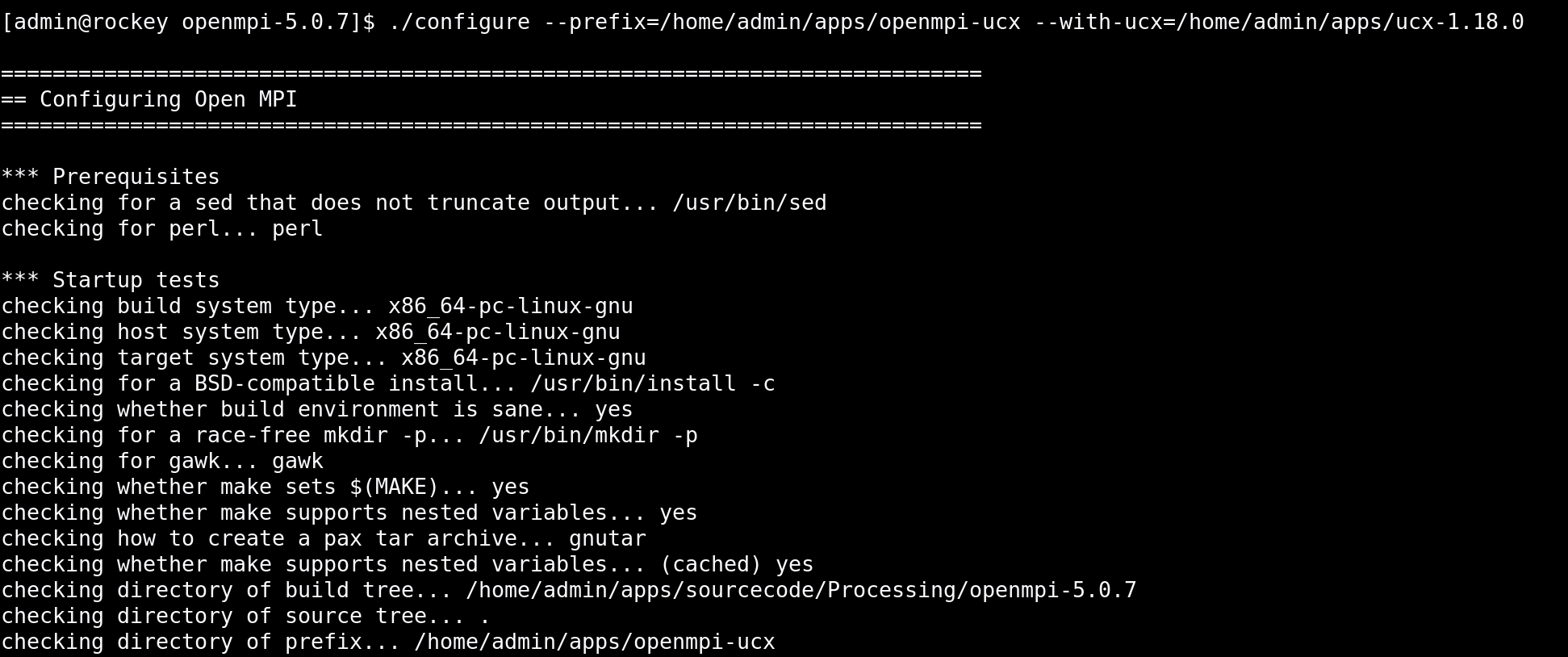
Now, configure OpenMPI to use UCX by specifying the UCX installation path using the --with-ucx flag.
./configure --prefix=/home/admin/apps/openmpi-ucx --with-ucx=/home/admin/apps/ucx-1.18.0
4. Compile OpenMPI
Once the configuration is complete, compile OpenMPI with the following command:
make -j
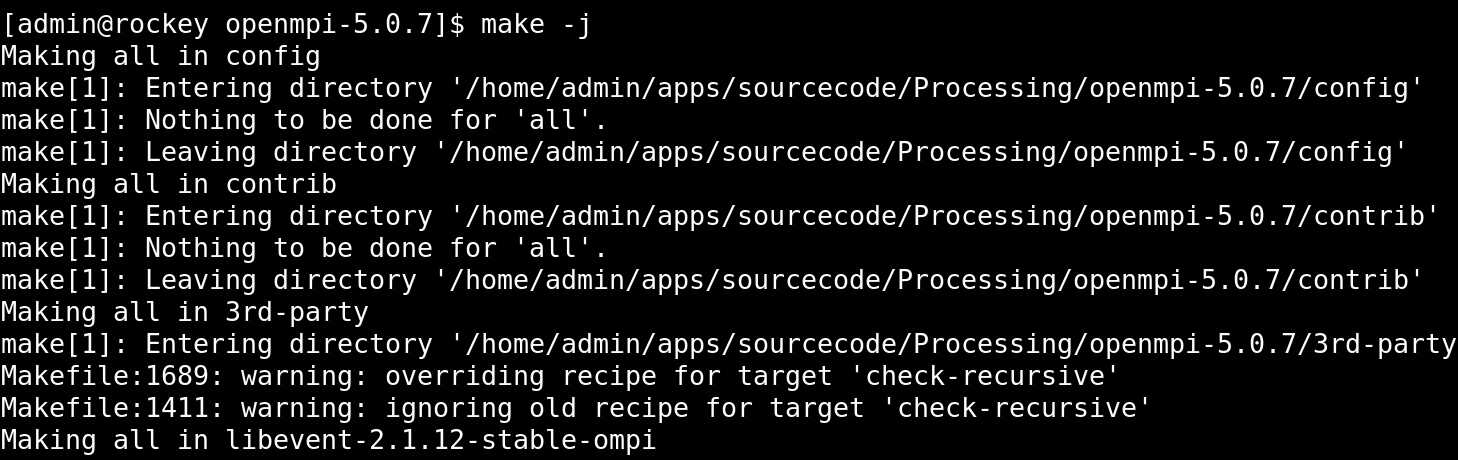 This will initiate the compilation process using multiple cores to speed up the build process. The
 -j option specifies the number of jobs to run simultaneously.
5. Install OpenMPI
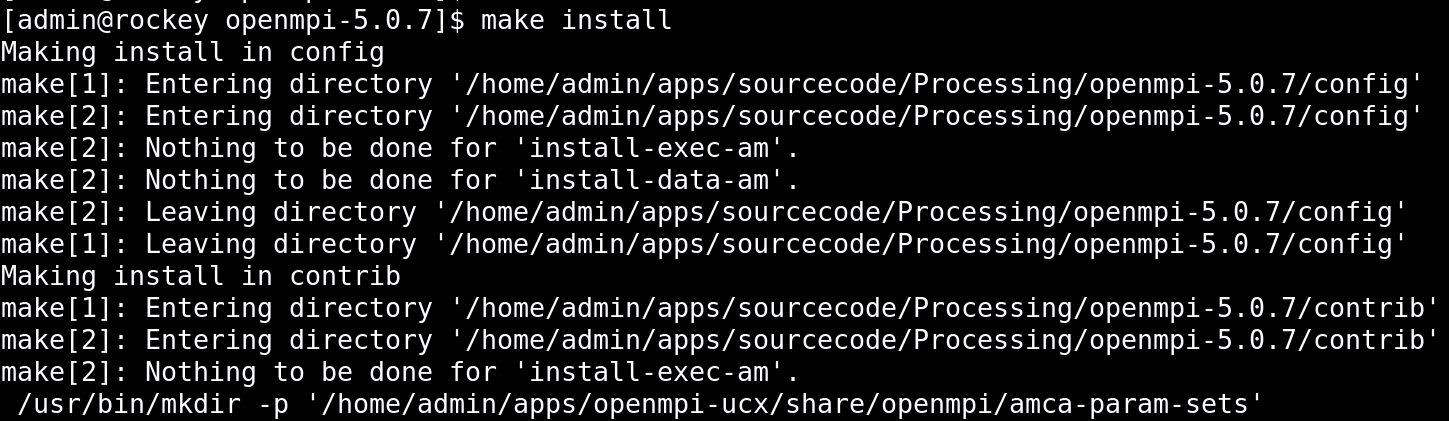
After compilation is complete, install OpenMPI:
make install
6. Verify Installation
Check the installation directories to ensure everything is in place:
cd /home/admin/apps/openmpi-ucx
ls
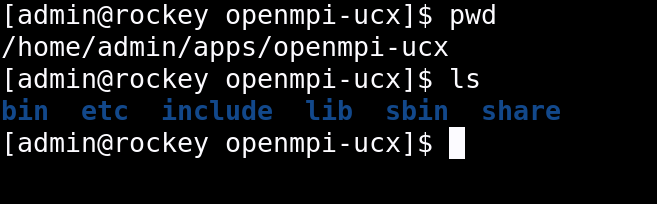
You should see directories such as bin, lib, and include, confirming that OpenMPI has been installed successfully with UCX support.